fishing store
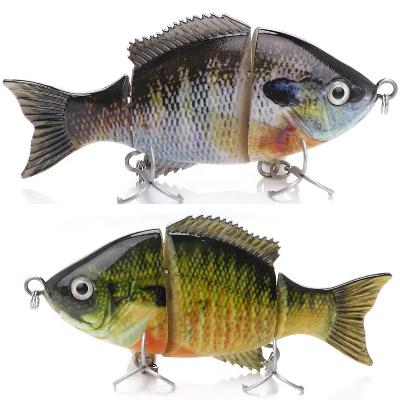
Panfish Jointed style hard bait

Panfish Jointed style hard bait

$ 7.49

3 3/4 inch 3/4 ounce (20 gram) Panfish style 2 segment jointed hard bait casting or trolling
Soft Frog Baits

Soft Frog Baits

$ 3.99

Soft Frog bait 2.5 inches 5/8 ounce with double hook rigged.
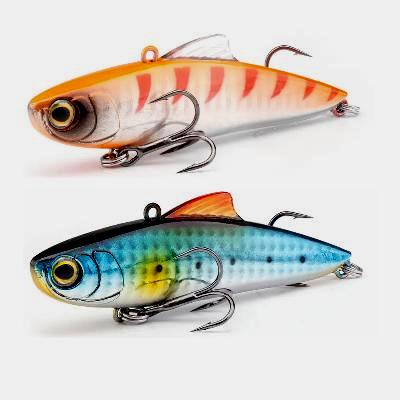
3 1/2 inch 3/4 ounce Vib  Hard bait

3 1/2 inch 3/4 ounce Vib Hard bait

$ 4.49

85mm 21 Gram Vib holographic deep diving vibrating fishing lure

Welcome to Boats & Accessories

You may Browse or Search in our database for the Items you are looking for
or
You may Add an Items you want to sell. Just click on the "Add Your Item" button on the left and fill in the form.
THANK YOU!

fishing wanted

 Aug 7, 2007; 10:55PM
 Category:  Sportfishing Charters
 Name for Contacts:  Bobby Wilson Fishing Guide Service
 Phone:  770 328 2106
 City:  Atlanta, Columbus, Newnan
 State:  Ga
 Country:  USA
 Description:  Fishing Guide Service, Seasons: January thru December, Monday thru Sunday, Guide Fishing Catch: Stripers, Hybrids, Crappies, Bass, Catfish. 6 or 8 Fishing Hours. Georgia Lakes, All Inclusive Fishing Packages. Fishing Equipment Included: Rods, Reels, Live Bait, Artificial Bait, Fishing Orientation, Guides Assistance. Accepting Reservations Now. www.WestpointLakeFishingGuides.com

fishing photo contest

w i n n e r
w i n n e r
Kids Only Fish Photo Contest
Kids 12 and under only in this contest A free tackle package to the photo with the most votes. Contest ends January 2014
Lucas Lamoureux5 lbsSmall mouth ...
Click the image for full story
Lucas Lamoureux, 4
Lucas first big bass
2355 vote(s)

fishing tips and tricks

 May 19, 2003; 09:01AM - Circle Hooks for Billfish
 Category:  Trolling techniques
 Author Name:  Carlos Morales
Tip&Trick Description 1: What are “circle hooks”? To a fisherman seeing one for the first time you kind of wonder why anyone would use them or took time to invent them. They are similar in size to the more common “J” shaped hook but the opening is smaller and the barb points toward the body of the hook forming a circular shape, hence their name. At first glance it would appear fish would seldom be caught with circle hooks because the barb points the wrong way and the smaller than usual opening would difficult hooking anything.

Surprise, surprise, first impressions are wrong. Depending which study an angler consults, circle hooks have been shown to be as effective or more effective than “J” hooks for catching all types of fish including billfish. Some studies say fishermen catch 60% more fish, others 100% more fish with circle hooks than with “J” hooks. Catching more fish is a bonus but the real advantage of circle hooks is that they are designed to hook a fish in the lip or corner of the mouth and this happens about 95% of the time, preventing “deep hooking” and “foul hooking”. Removing a circle hook is fast and easy, take a pair of pliers and rotate the hook out of the mouth.

A “J” hook works by attaching itself wherever soft tissue is available. Normally, as soon as a fish bites, the first thing an angler does is “set the hook” by swiftly pulling the rod up and reeling in some line. This violent maneuver guarantees (anglers wish) that the barb of the hook will penetrate some soft tissue inside the mouth thus hooking the fish. Some fish, like billfish, have bony mouths so when the “J” hook tries to find purchase it just slides along and it either pops out of the mouth with the bait or attaches to the the upper palate, throat, pharynx, oesophagus or in the stomach. Anglers who practice catch and release know deep hook injuries, caused by any type of hook, are often mortal due to bleeding and that the hook sometimes is left inside the fish since its so deep there is no way to remove it without killing the fish. This is not a problem for the angler fishing for tasty, sought after fish like Dorado (dolphin), flounder, mangrove snapper, redfish, grouper, etc., since the whole point of going fishing is catching fish to eat.

Here is where circle hooks come in. They have been around for years and were adopted in the late 1970’s for use by longline commercial fishing boats because not only did fish hook themselves but also studies showed they were 85% more effective than “J” hooks and the hooked fish were alive when the longline was retrieved. It is ironic that recreational anglers, to preserve fish, have recently adopted commercial fishing hooks known and used for their ability to catch large numbers of fish.

We did say fish hooked themselves and we are not joking. When fishing using circle hooks and a fish takes the bait, do not set the hook! Wait. Count out one Mississippi, two Mississippi, etc., meditate about why there are no pregnant ladybugs, speculate on the price of bananas on Mars, just don’t set the hook! As the fish swims away the line becomes taut allowing the hook to rotate inside the fish’s mouth and lodge itself in the corner of the mouth. When the rod is flexed and the line taut that means the fish is hooked. Patience is very important because if the angler tries to set a circle hook the same way as a “J” hook, more often than not it will just be pulled out of the mouth of the fish. After a bite a mate on our boats grabs the rod but doesn’t do anything until the billfish swims away pulling the line taut and bending the rod, then he counts to five and “tests” whether the hook has been set by reeling in some line. This technique usually works very well.

If a “self-hooking hook” was not good enough, circle hooks have other advantages. Once hooked, billfish tend to leap and violently shake their head side to side to try and loose the hook. It looks spectacular and anglers love it but “J” hooks are sometimes dislodged this way. The circle hooks round shape and the direction of the barb helps to prevent dislodgement so fish don’t de-hook as much when doing their aerial stunts. Another great advantage is that humans hook themselves less in the hand, ear and/or other body parts and clothes with circle hooks because the barb points toward the body of the hook.

Not all circle hooks are created equal though. Besides “normal circle hooks” there are “offset circle hooks” whose barb does not point to the body of the hook but opens up, similar to a “J” hook’s. Depending on the degree that the barb is offset, 4 to 15 degrees, they become about as effective as “J” hooks at deep hooking as in their ability to catch fish. Like “J” hooks, “offset circle hooks” also cause more foul hooking of fish. Foul hooking means hooking a fish by the eye, gills, etc. Billfish depend on their eyesight to hunt and catch their prey so an eye wound seriously diminishes a billfish’s ability to feed and damaging the gills hampers the billfish’s survivability. Some circle hooks are made out of stainless steel and will not degrade with time so if a fish is lost with a stainless steel hook in it, that hook will be in the fish forever.

In Guatemala “catch and release” for all billfish is the law. Since it’s beginning our company has adopted a circle hook only policy for bill fishing and releasing the fish unharmed is a very important goal. Guatemala has the best sailfishing in the world and we do our best to keep it that way.

Happy fishing and tight lines!!

fishing tips and tricks

 May 13, 2019; 08:07PM - OCEAN-TAMER Marine Grade Bean Bags
 Category:  Boats
 Price:  $79.95 - $139.95
 Name for Contacts:  Frank Abruzzino
 Phone:  (941) 776-1133
 City:  Palmetto
 State:  Florda
 Country:  usa
OCEAN-TAMER Marine Grade Bean Bags Description 1: Are you tired of the pounding and fatigue on your
body caused by a rough boat ride? Do you hate
slowing down and getting bounced around in rough
sea conditions? Now with an OCEAN-TAMER Marine
Grade Bean Bag you can enjoy a more relaxing and
comfortable ride and spend more time on the water.
Every OCEAN-TAMER product is 100% marine grade and
built to last right here in the USA. These marine
bean bags have been tournament tested and approved
by professional offshore fishermen all over the
country. With our vast color selection, styles, and
sizes you are sure to find the right marine bean
bags to fit your boating and fishing needs. Come
visit our user friendly website and customize yours
today.

WWW.OCEAN-TAMER.COM

fishing reports

 Sep 16, 2002; 12:53PM - Cabo Fishing Report
 Category:  Mexico Cabo San Lucas
 Author Name:  George Landrum


Capt. George Landrum Fly Hooker Sportfishing gmlandrum@hotmail.com www.flyhooker.com CABO SAN LUCAS FISH REPORT FOR SEPTEMBER 9-15, 2002 WEATHER: Have you been here in September before? Then you probably know that we are having temperatures in the 80-100 degree range with the humidity up in the 70% area. A bit on the muggy side most of the time and we have been having some overcast sky, mostly in the mountains with a chance of rain every now and then! Wednesday we actually had some rain and that was nice. Not a lot of wind this week except for the first few days, and then it was pretty light out of the northwest. (Borrasca) WATER: The Pacific side has been great with large swells early in the week from the passing of Tropical Depression 11W but not much chop to go with it. Later in the week the swells died down to 2-4 feet. The water on the outside of the Golden Gate Bank was reported to be a bit green but elsewhere it was nice and blue. The Cortez has been blue as well and surface conditions have been great, very calm. From the 22*40� line on north on the Sea of Cortez the water has been between 84 and 88 degrees, south of the line the water has been 83-81 degrees. This warmer water has extended in a finger to the west into the Pacific out to just past the San Jaime Banks. (Bajo La Luna Mix) BAIT: Early in the week there were plenty of Caballito available but this weekend there appeared to be a shortage for boats leaving after 7am. Few Mullet were available and I heard of no Sardinas for sale. Boats getting bait were paying the usual $2 per bait. (Dancing Under The Moon) FISHING: BILLFISH: The billfish bite has slowed down a lot, with fewer Striped Marlin being found, on average, and the Blue Marlin bite has remained about the same. Not to say there are not Marlin being caught, because there are, but not in the numbers of the last few weeks. There have been some Sailfish being caught as well, mostly found mixed in with the Dorado. The Striped Marlin are being found in a straight line, east to west, 12-15 miles south of the cape. The Blue Marlin have been slightly inside the line, on the warm side. Right place, right time with a live bait for the Striped Marlin and almost all of the Blue Marlin have been on lures with the favorite colors this week being the usual blue/black/purple, Mean Joe Green, Dorado and Petrolero. (La Rosa Negro) YELLOWFIN TUNA: Without a doubt the Yellowfin have been the highpoint of the week. The fish have been found from 16 to 40 miles out, all on the cooler side of the temperature break, and all the fish caught have been mixed in with the Porpoise. The first few boats to the schools have been able to get fish and some of them have been big ones! I have seen fish this week running from 15 pounds to 200 pounds and some boats have gotten more than one of these larger fish. Marlin lures and live baits have been the ticket although slow trolling spreader bars has brought up some fish after they have been hit hard by everyone else. Not every boat has been getting the larger fish but most of them have been able to get at least on pass on the school where they have picked up a few of the smaller footballs. (Bullfighter�s Dream) DORADO: The number of Dorado caught this week has dropped off a bit and the average size has gotten a bit smaller on the schooling fish, but the singles that have been caught have all been nice ones, most of them from #35 on up. Inside the temperature break and all the way up to the shoreline is where most of them were found this week and as usual the larger fish were caught on Marlin lures and the smaller fish on Tuna lures or cut bait dropped back behind a hooked fish. (Driving 2 Madrid/B4 The Storm) WAHOO: �What Hoo?� I saw no Wahoo this week, and only a few flags that may have been either Wahoo or Shark, it was hard to tell! (The Storm Sings) INSHORE: Inshore the fishing has been fair for Roosterfish and Jack Crevalle to 30 pounds and going just a bit outside has given anglers good fishing for Bonito and Skipjack, with some of these fish in the 15-20 pound range, nice fighting size! In that same range and going further out there have been fair shots at Dorado, both trolling and drifting with live bait. (1st Rain/Cry Of Faith) NOTES: If you are coming down to fish be prepared to purchase a fishing license either before you arrive or as soon as you get here. It�s better to get one before you arrive if you can because the license office here has posted hours but they are rarely followed. Often you must wait for the guy to show up, the paperwork takes a long time then you have to go to the bank to pay for the license, go back to the office with copies of the stamped payment slip to get the license. This process can take up to two hours to get through if the office is open when you arrive. For the past year most anglers have not been able to get licenses because of this, and the office will not sell boat owners stacks of blank licenses to sell on the boats. If you arrive at the airport in the afternoon and plan to fish the next day, forget it, it can�t get done. As boat owners we used to be able to go in the day before and purchase licenses with the anglers names and hometowns on them, but the office has decided that you must be there in person with I.D. to get a fishing license. Oh, and by the way, you can�t get them in the morning because the seller says it is too much work for him to get up early in the morning. The reason I am going on about this is because this week the Army guys with automatic weapons have been boarding boats coming into the marina after a days charter and checking for licenses. No license, the fish get confiscated and sometimes the fishing gear as well. We are trying to get something worked out, figure out some way for this to work, but it has been difficult. That is why I recommend that you purchase your fishing license before you arrive. Next week I�ll get into the fish filleting situation! This weeks report written to the soothing sounds of Ottmar Liebert Luna Negra on their 1991 Higher Octave release �Borrasca�!